
Lighting projects that involve elevated fixtures come with inherent risks. From parking lots and roadway lights to building-mounted and sports lighting systems, working at height requires more than experience — it requires the right equipment. That’s where bucket trucks play a critical role in high-reach electrical safety.
In this article, we’ll break down the key High-Reach Electrical Safety benefits of using a bucket truck for lighting work and explain why professional access equipment is essential for reducing risk, protecting assets, and ensuring long-term reliability.
Why High-Reach Electrical Safety Should Never Be an Afterthought
Electrical work performed above ground level increases exposure to falls, unstable surfaces, and environmental hazards. Improvised access methods like ladders or scaffolding often fail to provide the stability and protection required for professional lighting projects.
For commercial and municipal properties, poor safety practices don’t just endanger workers — they increase liability, downtime, and repair costs. Prioritizing proper access equipment is one of the most effective ways to improve safety outcomes.

1. Stable and Controlled Access at Height
Bucket trucks are designed to provide a secure, stable platform for electricians working at elevation. Unlike ladders, which rely on balance and surface conditions, bucket trucks offer controlled movement and positioning.
This stability allows technicians to:
- Maintain proper working posture
- Use both hands safely during repairs
- Focus on precision rather than balance
For elevated lighting systems, stable access is a foundational element of high-reach electrical safety.
2. Reduced Risk of Falls and Injuries
Falls are one of the leading causes of injury in electrical and construction-related work. Bucket trucks significantly reduce this risk by incorporating safety features such as guardrails, harness anchor points, and non-slip platforms.
When combined with trained operators and proper procedures, bucket trucks create a controlled environment that minimizes fall-related incidents — a major advantage for lighting projects in active commercial spaces.
3. Improved Safety Around Live Electrical Components
Lighting repairs often involve live circuits, ballasts, drivers, and control systems. Bucket trucks designed for electrical work include insulated booms and components that reduce the risk of accidental contact with energized systems.
This insulation adds an extra layer of protection, particularly in outdoor environments where moisture and weather conditions can increase electrical hazards. It’s a key reason why bucket trucks are widely used in professional high-reach electrical services.
4. Better Positioning Means Safer, Higher-Quality Work
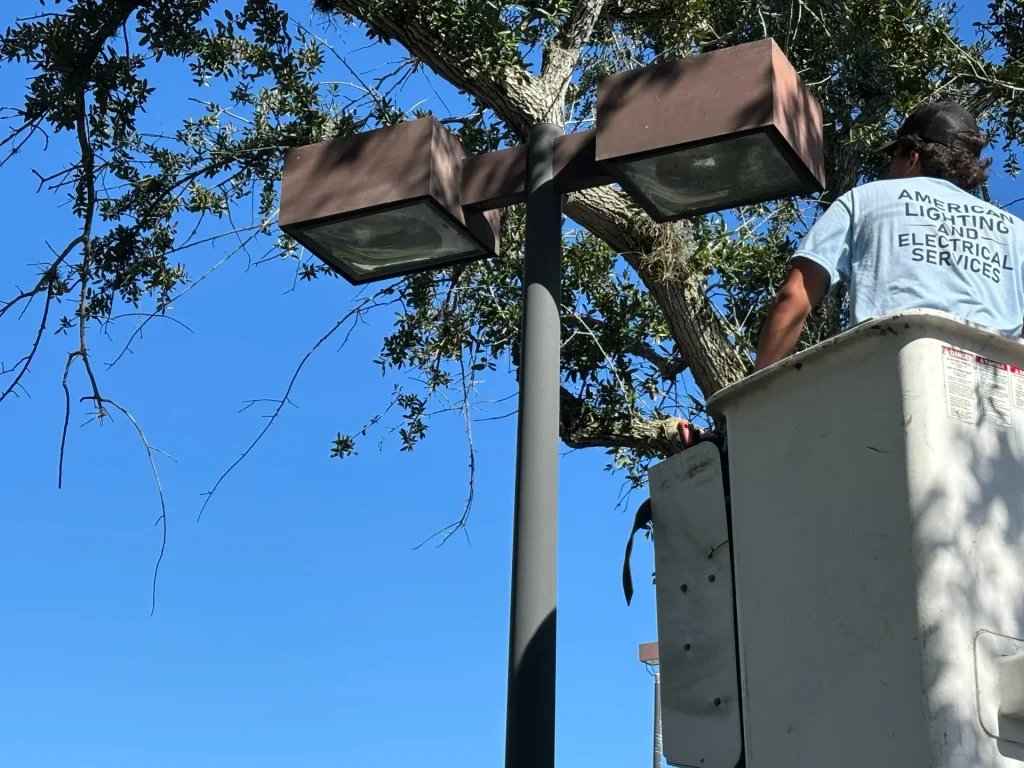
Poor positioning leads to rushed repairs, awkward angles, and mistakes. Bucket trucks allow technicians to position themselves precisely where they need to be, reducing strain and improving visibility.
This level of control supports:
- Accurate fixture alignment
- Secure wiring connections
- Proper installation of lighting components
Safer positioning not only protects workers but also improves the overall quality and longevity of lighting repairs.

5. Safer Worksites for the Public and Property
Lighting projects frequently take place in parking lots, roadways, and commercial properties that remain partially active during repairs. Bucket trucks help create safer work zones by minimizing the footprint of access equipment and reducing setup hazards.
When combined with professional traffic and site control measures, bucket trucks contribute to safer environments for pedestrians, vehicles, and surrounding property — especially during parking lot lighting repair projects.
How Bucket Trucks Support Compliance and Risk Reduction
High-reach electrical safety isn’t just about best practices — it’s often a compliance requirement. Regulations and safety standards frequently mandate proper access equipment for elevated electrical work.
Using bucket trucks helps ensure:
- OSHA-aligned safety procedures
- Reduced liability exposure
- Proper documentation and inspections
- Insurance compliance
For commercial property owners and facility managers, this translates into fewer legal and operational risks.
When Lighting Projects Require Professional High-Reach Equipment
Not all lighting jobs are equal. Projects involving tall poles, large fixtures, or hard-to-access locations should always be handled by professionals with the right equipment.
This is especially true for:
- Commercial parking lots
- Sports and recreational facilities
- Roadway and area lighting
- Industrial and warehouse exteriors
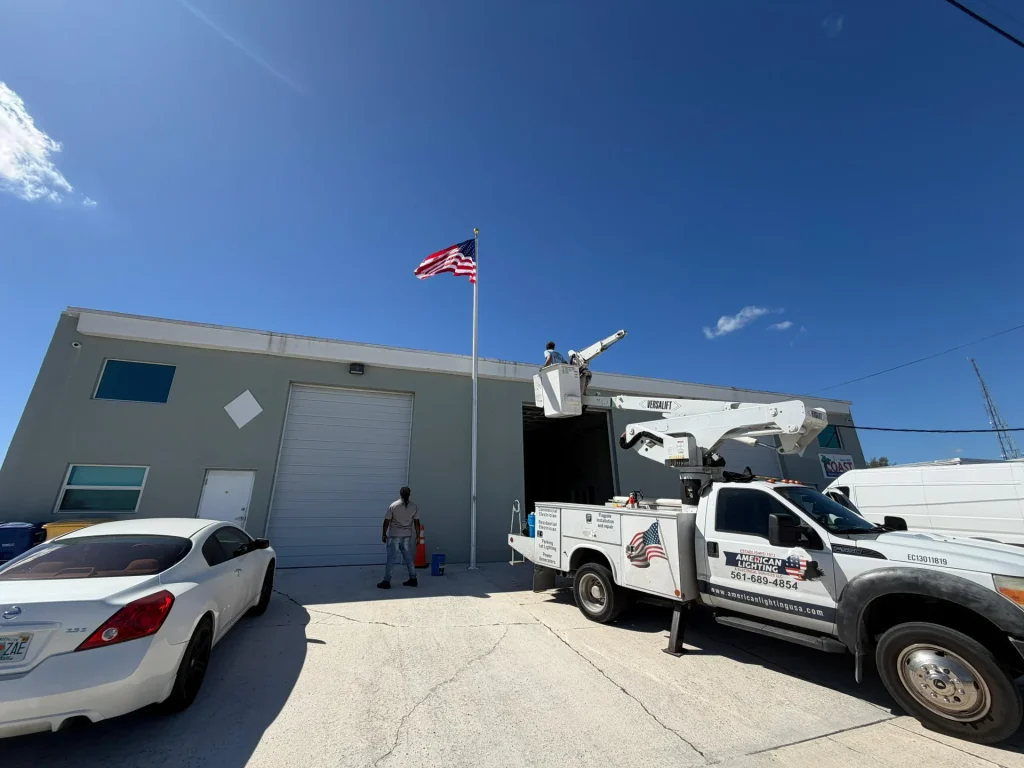
Professional teams offering bucket truck services combine access equipment with trained technicians to deliver safe, reliable results.
Frequently Asked Questions
Are bucket trucks safer than ladders for lighting work?
Yes. Bucket trucks provide a stable platform, fall protection features, and controlled positioning that ladders cannot offer for high-reach electrical work.
Do bucket trucks reduce electrical hazards?
Many bucket trucks used for electrical work are insulated, helping reduce the risk of electrical shock when working near energized systems.
Is using a bucket truck required for commercial lighting repairs?
In many cases, safety standards and site conditions make bucket trucks the safest and most compliant option.
Who should operate a bucket truck during lighting projects?
Only trained and certified professionals should operate bucket trucks for electrical lighting work.
Conclusion
When it comes to high-reach electrical safety, the equipment you use matters just as much as the expertise behind it. Bucket trucks provide stable access, fall protection, electrical insulation, and safer worksites — all critical factors in professional lighting projects.
For commercial and municipal properties, investing in proper access equipment isn’t just about getting the job done — it’s about protecting people, property, and long-term performance. Partnering with professionals who specialize in high-reach electrical lighting solutions ensures safety is built into every stage of the project.