
Storms can strike unexpectedly, leaving commercial and industrial properties with damaged lighting and electrical systems. When this happens, emergency high-reach repairs are critical to restore safety and operations quickly. Learn why professional emergency bucket truck services are essential, what to expect, and how to respond to storm-related damage efficiently.
Severe weather events—high winds, heavy rain, lightning, and ice storms—can compromise high-reach lighting and electrical systems. Commercial properties, parking lots, stadiums, and industrial facilities are particularly vulnerable.
Quick response is key to maintaining safety, minimizing downtime, and preventing further damage. This guide explores emergency high-reach repairs, highlights the benefits of professional service, and helps facility managers understand when to call for assistance.
Why Storm Damage Requires Emergency Repairs
Storms can cause significant issues with high-reach lighting and electrical equipment:
- Pole or fixture damage: Wind can bend poles or break fixture housings
- Electrical failures: Lightning strikes or water intrusion can disrupt circuits
- Fallen branches or debris: Obstructing lights and creating hazards
- Safety hazards: Non-functional lights increase accident risk for pedestrians and vehicles
Delaying repairs not only prolongs downtime but also increases liability risks. Using emergency bucket truck service ensures a safe, professional response to storm damage.
Assessing the Damage Safely
Before attempting any repairs, a careful assessment is necessary:
1. Ground-Level Inspection
- Look for visibly damaged poles, lights, or electrical components
- Identify hazards such as fallen wires, debris, or leaning structures
- Take photos to document the damage for insurance purposes
2. Safety Precautions
- Turn off power to affected circuits whenever possible
- Keep staff and the public at a safe distance
- Avoid climbing or using makeshift ladders for elevated repairs
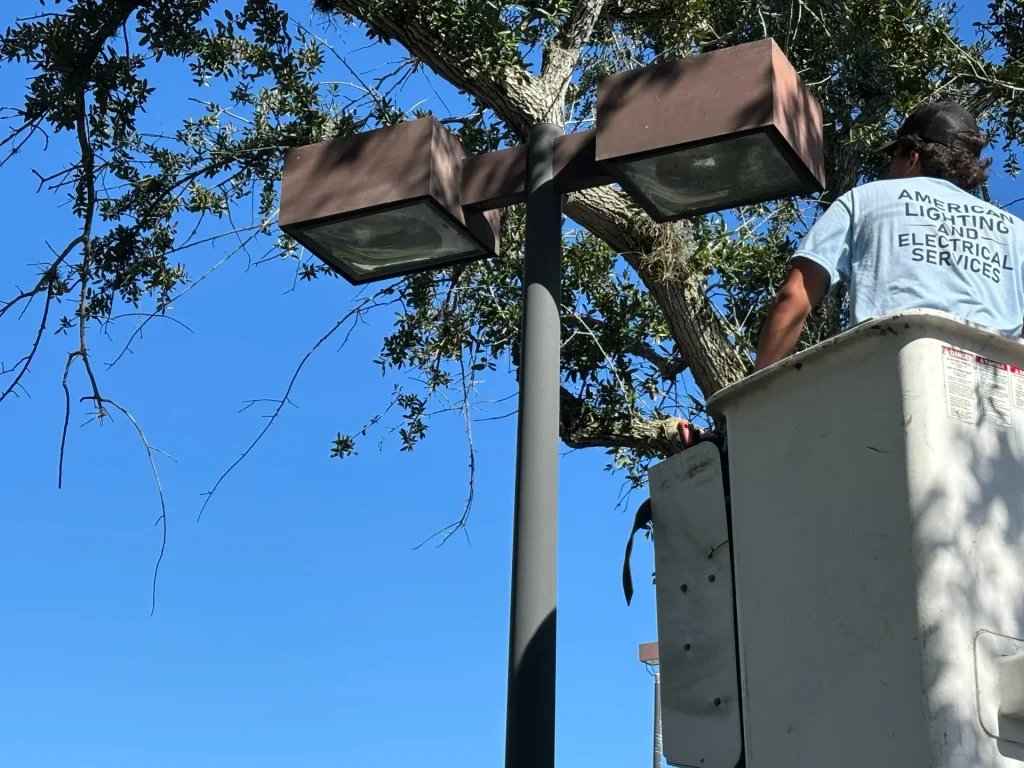
Professional bucket truck operators are trained to safely access damaged high-reach fixtures.
Step-by-Step Emergency Repair Process
Emergency repairs require a systematic, safe approach. Here’s how professionals typically respond:
1. Deploy the Bucket Truck
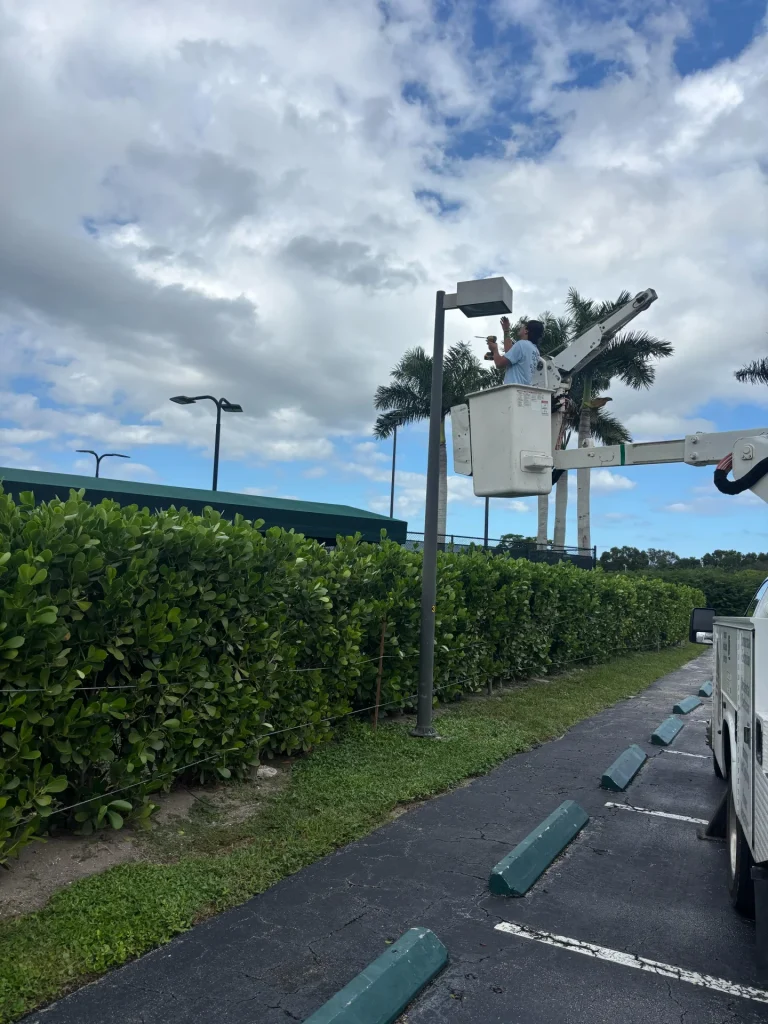
- Operators use bucket trucks to safely access tall poles and fixtures
- The truck’s stability and height capacity are critical for storm-damaged areas
- Multiple trucks may be needed for larger facilities
2. Remove Damaged Components
- Carefully disconnect electrical components, bulbs, and fixtures
- Remove debris or broken parts to prevent further hazards
- Inspect wiring and structural integrity before installing replacements
3. Install Temporary or Permanent Fixes
- Temporary repairs may include powering down affected circuits or replacing broken bulbs
- Permanent fixes involve installing new fixtures, repairing wiring, and ensuring structural stability
- Repaired systems are tested to ensure proper operation
4. Test and Verify Safety
- Check for proper illumination levels
- Confirm that controls (timers, photocells) are functioning correctly
- Ensure all repaired areas meet safety codes
Using a professional team ensures repairs are compliant and reduces liability for property owners.
Benefits of Hiring Professional Emergency Bucket Truck Services
Professional services offer several advantages over DIY or ad-hoc repairs:
- Safety: Trained operators reduce accident risk
- Speed: Rapid response restores lighting and operations quickly
- Efficiency: Proper equipment ensures thorough, lasting repairs
- Insurance compliance: Documented repairs support claims for storm damage
- Preventive insight: Technicians often spot issues that could cause future outages
Hiring professionals like American Lighting USA ensures both immediate relief and long-term reliability.
When to Call for Emergency Bucket Truck Service Repairs
Storm damage can vary from minor flickering lights to completely downed poles. Contact professionals if you notice:
- Lights not functioning after a storm
- Damaged poles, fixtures, or cabling
- Fallen wires or exposed electrical components
- Safety hazards to employees, customers, or the public
Early intervention minimizes downtime and prevents secondary accidents. Learn more about our emergency bucket truck service for storm response.

Preventive Measures Against Storm Damage
While you can’t stop storms, proactive steps reduce future risks:
- Regular inspections: Quarterly maintenance identifies weak poles, corroded fixtures, and faulty wiring
- Secure fixtures: Ensure all lights are mounted and reinforced against high winds
- Upgrade lighting systems: Modern LEDs and weatherproof enclosures offer better resilience
- Emergency readiness plan: Partner with high-reach electrical service providers for rapid response
Frequently Asked Questions
How quickly can emergency high-reach repairs be performed?
Response times for Emergency Bucket Truck Service is vary, but professional teams can often begin repairs within hours, depending on site accessibility and storm severity.
Can I handle minor storm damage myself?
Avoid working at heights or near live circuits. Even small repairs can be dangerous—call a certified bucket truck service.
Does insurance cover storm-related high-reach lighting damage?
Many commercial property policies cover lighting and pole damage, but proper documentation and professional repair are typically required.
What equipment is needed for emergency repairs?
Bucket trucks, safety harnesses, insulated tools, and electrical testing equipment are essential for safe, efficient work.

Conclusion
Storm damage to high-reach lighting requires swift, professional intervention. Using experienced emergency bucket truck service providers ensures repairs are safe, compliant, and long-lasting.
By assessing damage carefully, following proper safety protocols, and partnering with qualified professionals, property owners can restore lighting quickly, protect assets, and maintain safety for employees and visitors.